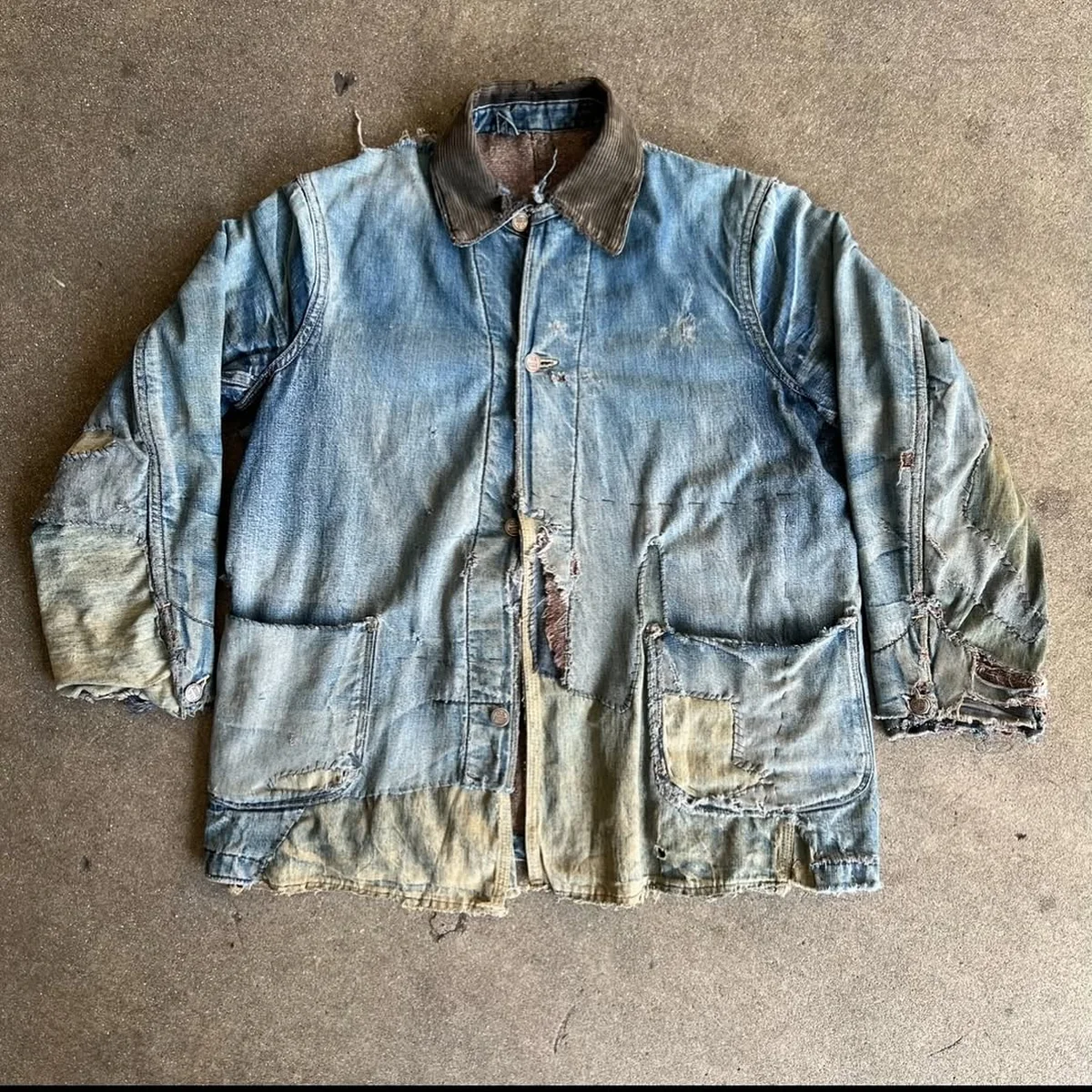
Vintage denim & old jeans
We buy older jeans and denim garments, including old Levi’s and other makers. Unfamiliar or missing labels are welcome; you do not have to identify a pair before asking.
- Jeans, work trousers, and cutoffs
- Denim jackets and chore garments
- Overalls and unfamiliar denim pieces
Pockets, seams, closures, labels, and old repairs may help us understand a piece. A few ordinary photos are enough to begin.
Ask about what you haveLearn about vintage Levi’s and vintage Lee clothing.
Workwear, railroad & farm clothing
Work clothes from railroads, farms, factories, garages, and other trades are part of our buying interests. They belong here even when they look like ordinary old work clothes.
- Chore coats, shop jackets, and work shirts
- Overalls, coveralls, and work pants
- Railroad clothing, trade uniforms, and industrial garments
You do not need to prove a railroad or company connection. If you know where the clothing came from, you can tell us; if you do not, send what you have.
Ask about what you haveLee jacket identification and dating
Everyday & antique clothing
Our interests extend beyond denim and uniforms. Older everyday garments, knitwear, and unusual antique clothing are welcome, including pieces with no recognizable maker.
- Shirts, jackets, and trousers
- Knitwear and everyday garments
- Antique, handmade, or unfamiliar clothing
Age, construction, fabric, and overall form can matter. Do not rule something out because it lacks a famous label or does not fit another category.
Ask about what you haveWestern & ranch wear
We review older Western clothing, ranch garments, and specialty pieces. Everyday working clothes and more decorated garments can both be worth showing.
- Snap shirts and embroidered pieces
- Rodeo and riding garments
- Ranch jackets and practical Western clothing
Leave missing snaps, worn cuffs, embroidery, and old repairs as found. There is no need to fix a garment before we see it.
Ask about what you haveMilitary clothing & uniforms
Military garments and T-shirts are among our buying interests. Unfamiliar uniforms and pieces with partial or missing labels can still be shown.
- Field jackets and utility shirts
- Military trousers and coveralls
- Military T-shirts and garments with service markings
If there are visible stamps, names, patches, or other markings, leave them in place. You can send closer photos later if they help with our conversation.
Ask about what you haveSouvenir & specialty garments
We are also interested in clothing made for particular occasions, places, schools, and personal use. These pieces may not fit neatly into a standard clothing category.
- Souvenir jackets
- Senior cords and collegiate clothing
- Handmade pieces and uncommon garments
A simple description of what you see is enough. If you know a story behind a piece, feel free to share it; researching one is not required.
Ask about what you haveDeadstock & old store inventory
Deadstock means older merchandise that remained unworn or unsold. Old store inventory and forgotten groups of clothing are part of our interests alongside individual garments.
- Unworn older merchandise
- Boxes of forgotten clothing stock
- Collections and larger groups of garments
For a large group, start with a call or a few broad photographs. You do not need to unpack, count, or photograph every item first.
Ask about what you haveClothing advertising & antiques
Related historical objects can belong in the same conversation as the clothing. Tell us about old displays and advertising found in stores, workrooms, or collections.
- Vintage workwear and clothing advertising
- Antique clothing racks and T-bar displays
- Old store fixtures and related historical objects
Show the object and tell us your general location. For bulky items or larger groups, practical arrangements need to be discussed individually.
Ask about what you have